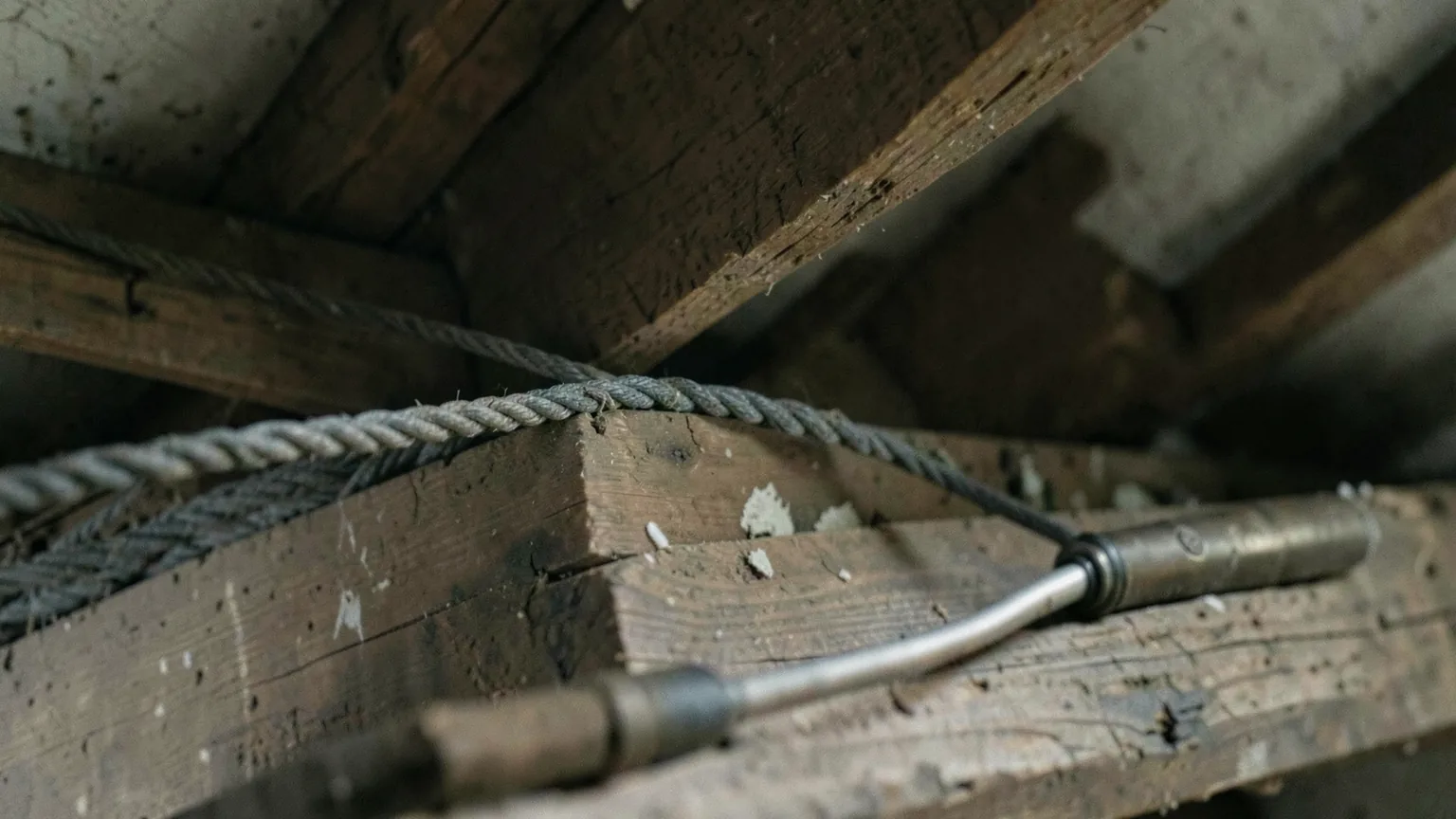
Old wiring types found in older Exeter houses
Buyers and owners of older houses in Exeter often open a consumer unit or lift a floorboard and find cabling they do not recognise. Rubber-insulated cable, lead-sheathed cable, cloth-covered flex and round-pin sockets were once standard, and some of them are still in service. Their presence does not automatically mean the installation is dangerous, but the materials age, and their condition is hard to judge by sight alone. This guide explains the common types of old wiring, how deterioration shows itself, what the older sockets and switches mean for a home and why testing is the only reliable way to know what is safe.
Rubber-insulated and lead-sheathed cables
Rubber insulation was widely used in the first half of the last century and in houses built or rewired before plastic insulation became standard. Rubber hardens and cracks with age, particularly where it is exposed to heat, light or repeated bending. Lead-sheathed cable was used in some older installations as a protective outer layer. The sheath can corrode, and the cable inside can then be exposed to damp or mechanical damage.
A cable that looks intact on the outside may still have degraded insulation inside. The only reliable way to find out is to test it, and an installer will normally recommend replacement of the affected circuits rather than attempting to patch them. Where the cable is sound, the test results will show it; where it is not, the report should say so plainly.
Cloth and PVC deterioration
Cloth-covered cable, sometimes called braided cable, was used for lighting and sockets in many older houses. The cloth covering offers little protection from heat or damp, and the insulation beneath can dry out and crumble. Some older installations also used early PVC insulation, which can become brittle with age and may crack when disturbed. Neither material is safe to leave in service without assessment, particularly where the cable runs through a hot loft or a damp wall.
Signs of deterioration include brittle or cracked sheaths, discoloured or sticky insulation, a burning smell near a fitting and sockets or switches that feel warm. None of these signs proves a fault on its own, but any of them is a reason to ask for an inspection before the circuit is used heavily.
Round-pin sockets and old switches
Round-pin sockets, often with a two-pin or three-pin arrangement, were common in older homes and remain in place in some properties. Their design differs from modern sockets, and adapters used to plug modern equipment into them can overload the outlet or fail to make a good connection. An installer may recommend replacing the sockets and the circuit they belong to, rather than relying on adapters.
Old switches can present similar problems. Switches with worn contacts, cracked bodies or no earth connection are hard to make safe without replacement. Where the switch is part of an older circuit, the installer will check the connections and recommend a modern replacement where needed. A switch that buzzes, feels loose or runs warm should not be ignored.
Why testing is needed
Testing is the only reliable way to find out whether an old installation is safe to keep using. Businesses with older premises have separate duties for portable equipment, which the guide on PAT testing for Exeter businesses explains. A visual check can spot obvious defects, but it cannot measure insulation resistance, continuity of the earth or the performance of protective devices. An inspection by a qualified person records those measurements and gives a clear view of what is safe, what needs attention and what should be replaced.
The standard for the wiring is the BS 7671 Requirements for Electrical Installations published by the IET, and an inspection against that standard will identify departures from current practice. An older installation that complied with the rules when it was installed may still fall short of the modern standard in ways that matter for safety.
What the building rules say
Replacing old cabling falls under Part P of the Building Regulations like any other electrical work in a home. The current edition of Approved Document P explains that repairs and replacements are not notifiable in themselves, but installing a new circuit or replacing the consumer unit is, and replacing old wiring usually involves one or both. Notifiable or not, the work should be inspected, tested and certificated to BS 7671, so a replacement job should produce paperwork that names the cables removed and installed, and records the tests carried out on them.
A let property sits under a separate regime. Inspection by a qualified person has to happen before a tenancy starts, and then at intervals that the private rented sector rules cap at 5 years. Where an inspection of older cabling finds faults, the landlord is then expected to act on the findings.
Buying a house with old wiring
Buyers should ask for the wiring to be inspected before exchange, because a survey may not check the electrics in detail. The inspection will show the type of cable, the condition of the sockets and switches and the state of the consumer unit. The report is also a useful basis for negotiating the price, particularly where the work needed is extensive.
Where the house has been partly rewired, ask for the paperwork for each stage. A mix of old and new cabling is common in houses that have been altered over time, and the mix itself can cause problems if the new and old circuits are joined without proper protection. A clear record of what has been done and when helps the inspector and the buyer.
Living with an older installation
Not every older installation needs to be replaced at once. Where the inspection finds sound cable, a suitable board and protective devices that work, the owner can keep the installation in use while planning a programme of improvements. The report should say clearly which parts are satisfactory and which need work, so the owner can decide what to do first and what can wait.
Day-to-day habits matter too. Avoid overloading old sockets with adapters or extension leads, do not cover old fittings with fabric or furniture, and keep heaters and electric blankets away from cable that looks worn. Report any flicker, burning smell or unexpected warmth promptly, because those signs often appear before a serious fault. A simple habit of looking at the sockets and switches each month helps spot changes early.
Planning the replacement in stages
A staged programme makes the work manageable and spreads the cost over time. The first stage is usually the circuits that serve the kitchen, bathroom and any room with heating appliances, because those places carry the heaviest loads and the highest risk of damage from water or heat. The second stage covers the lighting and the remaining sockets, and the final stage deals with the board and any remaining older cable in the loft or the walls.
Plan the stages with the installer so that each one leaves the installation in a safe state. A partly replaced installation needs careful joining and testing, and the paperwork for each stage should show exactly which circuits have been changed. Ask the installer to explain how the old and new cables will be connected and protected at the join.
What to do next
For an older house in Exeter, start with an inspection that tests the whole installation rather than a single circuit. Ask the inspector to identify the cable types, to record the condition of the sockets and switches and to recommend the work that is needed. Use the report to plan the replacement in stages if the budget is limited, starting with the circuits that present the greatest risk.
Where a full rewire is recommended, a full rewiring service describes the scope of work and how it is planned. For a board that is old, a consumer unit upgrade often comes with the rewire, and a general inspection gives a clear baseline before the work starts. Where a circuit is already faulty, a fault-finding visit can identify the cause before any replacement begins.
The wiring history of a house is written in its alterations rather than its postcode. A property in Exwick may have been rewired in stages, while one a few streets away may be untouched, so the inspection should be planned for the particular house. A request for a quote describing the age of the house, the known changes and any symptoms will help the installer plan the survey.